VNCS

Natural Resource Based Sustainable Livelihood

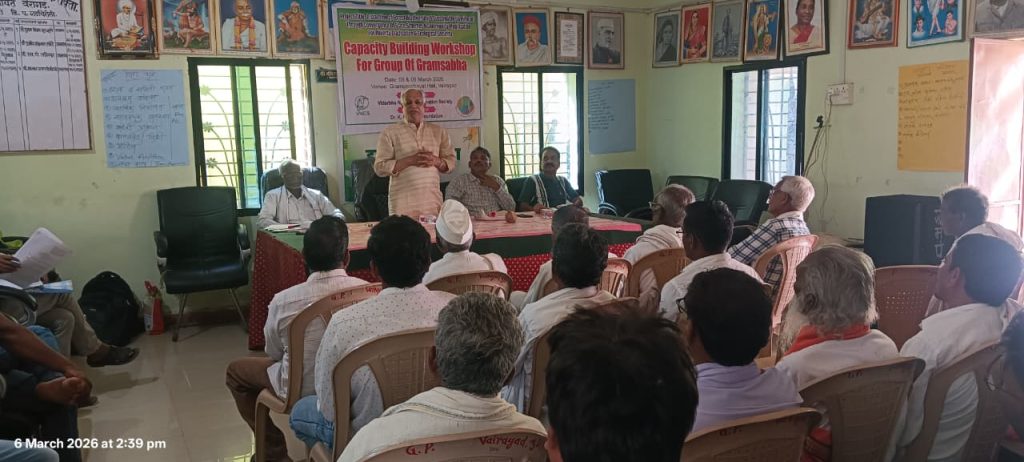
          Project Duration – April 2015 to March 2023 Support Agency: Paul Hamlyn Foundation (PHF), UK. Implementation Agency: Vidarbha Nature Conservation Society (VNCS), Nagpur, India.   Working Area of the Project Block: Deori, Dist. Gondia Block: Armori, Dist. Gadchiroli Total Villages – 25 Forest area under CFR – 7182.39 Ha Total Household    – 3209 Population – 14239 Male- 7110 Female – 7129 Tribal Household – 2567 Population – 9451 Male – 4626 Female – 4825        Project Activities:    Strengthen the gramsabhas and local level institutions with the right to protect, regenerate, conserve and manage community forest resources. Capacity building of the community leaders on governance/natural resource management/business planning, marketing and adoption of new technologies. Develop community base production, collection, processing & marketing systems for livelihood security of the forest dependent communities. Advocacy and networking through the Vidarbha Livelihood Forum (VLF) platform for engaging in state level processes for policy change and dialogue to create positive environment about implementation of FRA in the Vidarbha region.   Establishing community institutions such as Gramsabhas & its executive committee under section 4.1 (e) of FRA for planning, implementation & management of common resources. The project intends to reach out in 10 existing (1,117 households covering 4892 population).  Settings up inland fisheries with 400 families, agriculture development with 7463 household of the previous and next phase villages, tree plantation (bamboo, timber & fruit bearing trees) with 1000 marginalized household.  Strengthening local governance by section 4.1 (e) committees & Gramsabhas in 25 project villages. Developing income generation units on tendu leaves, fishery & mahua flowers. Convergence of resources from various government departments. Identifying local issues & advocacy at local & state level.    

Natural Resource Based Sustainable Livelihood Read More »

Natural Resource Management (NRM) through education and awareness (Young Environmentalist Project)

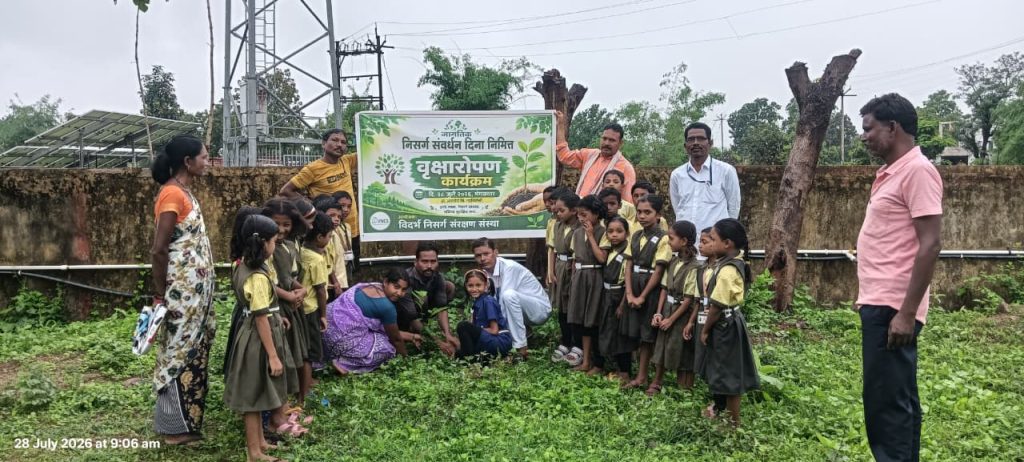
This project involved working with 5000 students and more than 140 villagers in 5 protected areas of Eastern Vidarbha region of Maharashtra. The major issue being sensitizing the youth and also building a cadre of field level animators. Many of these young men have now promoted their own CBOs with a view to continue the process.

Natural Resource Management (NRM) through education and awareness (Young Environmentalist Project) Read More »

Natural Resource based sustainable livelihoods amongst tribal and other weaker forest dwellers

Goal: Improved quality of life of marginalized tribal communities through effective governance of natural resources for their sustainable livelihoods Objectives Consolidating CFR work in project villages with special reference to implementation of Conservation and Management Plans (CMPs) and also Soil and Moisture Conservation through mobilization of MGNREGS. Initiate Gram Sabha and CFRMC strengthening process and facilitate implementation of CMPs. Promote supporting livelihood mechanisms using other resources such as MFPs Strengthening Vidarbha Livelihood Forum through a process of networking amongst members Geographic Focus:  25 villages of Deori and Armori blocks of Gondia and Gadchiroli districts respectively Maharashtra. Major Activities  Capacity building of CFRMCs formed under section 4 (1) e of Forest Rights Act 2006 (FRA 2006). Awareness and education in project villages. Management of CFR with technical expertise and back up. Livelihoods based on MFPs/Fisheries and agricultural intensification, Empowering Gram Sabhas at village level for trading Tendu Patta (as this is one of the largest income sources for tribals), bamboo and other local Minor Forest Produces. Promote fisheries wherever possible. Facilitating Convergence with line departments e.g. Forest, Revenue, Tribal Development, Fisheries, Agriculture, Animal Husbandry, Biodiversity Board, MGNREGS, etc. Deliberate efforts to mainstream gender perspectives in all project strategies to ensure women are involved at every stage and are empowered in the process. Advocacy for effective implementation of FRA and related programs and policies through convergence of various schemes to develop CFR lands. Capacity building of VLF members for joint advocacy. Project Outcomes Empowered community institutions such as Gram Sabhas and its Executive committees under section 4(1)(e) of FRA namely ‘Community Forest Rights Management Committees (CFRMC)’ to consolidate implementation and management of Conservation and Management Plans on acquired CFR lands under the act. Strengthened Gram Sabhas and CFRMCs in project villages Mobilized District Convergence Committee and concerned line departments for implementation of C and M plans in project villages and paves ways for other villagers to plan for the same. Set up inland fisheries for 1000 families in at least 20 villages, agriculture development with 4000 households of the project villages. Set up tendu leaves and Mahua flowers trades with at least 3000 families and e-tendering for smooth functioning of work and assured incomes Strengthened Management Leadership skills in CFRMC leaders to manage their committees and constructive dialogue with block and district level authorities for the development of CFR lands and villages in general. Constructive dialogue with policy makers brought synergy among the conflicting policies like Community Forest Rights, PESA, Village Forest Rules, and Joint Forest Management, and made these policies largely pro people. At least Rs. 6 Crore mobilized from developing CFR lands in project villages through convergence.

Natural Resource based sustainable livelihoods amongst tribal and other weaker forest dwellers Read More »

To organize and support forest dependent communities in Vidarbha, Maharashtra for more effective policies and market interventions to raise their incomes from farm and forest produce.

Project Title:  To organize and support forest dependent communities in Vidarbha, Maharashtra for more effective policies and market interventions to raise their incomes from farm and forest produce. The project proposes to address following issues related to:  Farm, forest and water based livelihoods for focused communities with an objective of increasing their incomes and livelihood options which are ecologically sound Active involvement of government programs and schemes in developing farm lands, forests and water resources of tribal and other forest dependent communities Community institution, NGOs and network of NGOs in the vicinity need to be capacitated by building their capacities for NRM based livelihood programs to create wider impact on communities, society and geographic areas Lack of awareness amongst general public groups and stakeholders about need and importance of protection, conservation and regeneration of natural resources through active involvement of communities and partnerships with government and NGOs Geographic Focus:  The project proposes to work directly and indirectly at grassroots and through the VLF ((Vidarbha Livelihood Forum)) NGO network in Vidarbha region. This will include promotion of land, water and forest based sustainable livelihoods working directly in 15 villages (10 villages of Gadchiroli districts and 5 villages of Gondia district) and also support similar activities in operational villages of VLF members in Vidarbha. The project participants are tribal and other poor forest dependent communities developing their farm lands, community forests for Minor Forest Produces and water bodies for irrigation and fisheries. Each NGO is working in at least 40 to 50 villages thus 300+ villages will benefit from inputs from this project in at least poverty-stricken seven districts of Vidarbha region.  The project will address these issues by implementing relevant schemes from concerned government agencies and by facilitating their partnership with local communities.   LONG TERM GOAL Assured natural resource based livelihoods for forest dependent communities through partnership with development agencies. And, various stakeholders including CSOs and their networks are aware of environmental issues and start responding to them by conserving and regenerating their ecosystem around.   Project Objectives: Active village community institutions and their District and Regional level Federations with acquired skills in planning, implementing and managing their local natural resources for sustainable livelihoods Active partnerships between community institutions and government agencies for implementation of various progressive policies and programs related to agriculture, forests, water and Minor Forest Produce (MFP) resources for development of forest dependent communities. Increased incomes of the community from agriculture, forests especially trading of MFPs (Tendu, Moha and Bamboo) and fisheries at least by 40% from third year with assured nutrition. Women’s demonstrated representation at leadership, livelihood benefits, dialogue with government agencies and active participation in all decision making processes. Strengthened NGO network (Vidarbha Livelihood Forum) effectively managing their grassroots development programs and helping communities to access programs and schemes meant for them. Responsive larger public groups and stakeholders especially youth, schools/college students, medical practitioners, CSOs, environmentalists/experts, etc. and aware of the need of environmental conservation and management and propagation of the same on the ground.   Major Activities Developed Village Level livelihood Plans for implementation by seeking resources from concerned development agencies Capacity Building of village community leaders to help them manage their development programs in long run and evolving sustainability of land, water and forest based intervened development activities Technical Experts (Consultants) have been engaged for need based inputs in the areas of land and sustainable farming practices, water conservation, nursery raising and plantation, MFP processing and trading, formation and capacity building of Regional and district Federations of village institutions, promotion of fisheries, constructive dialogue with authorities and traders, use of GPS, etc., to create sustainable livelihoods.  Staff Capacity Building and Meetings on project themes for effectively promoting and strengthening community institutions and facilitating project activities and processes at various levels (communities, development agencies, VLF members and stakeholders).  Facilitate Partnership with government line departments for land, water and forest based sustainable livelihoods for focused communities  District Coordination workshops with Line Departments for Partnerships and Convergence for realization of livelihood plans  Promoting Minor Forest Produce harvesting and trading  Marketing feasibility studies for trading of MFPs, Inland Fishing and Eco-tourism.  Strengthening CSO Network through capacity building and field level support for wider impact on focused communities in Vidarbha Region Communication with diverse stakeholders for propagation of successful environmental management interventions of VNCS network for wider impact on society  Midterm Review and End Project Evaluation for mid-term corrections, if any and learning for VNCS and stakeholders

To organize and support forest dependent communities in Vidarbha, Maharashtra for more effective policies and market interventions to raise their incomes from farm and forest produce. Read More »

How Community Forest Rights Empowered Gondia’s Women And Youth.

Recognition of community forest rights has improved the socio-economic status of women and reduced distress migration among youth of the forest villages of Gondia By Flavia Lopes|15 Apr, 2022 Gondia (Maharashtra): In a room full of men gathered for the federation meeting, Shevanta Kumeti stands out. Dressed in a colourful saree with the loose end pinned to her shoulder, and a bindi on her forehead to mark her married status, the 46-year-old is a member of the gram sabha of Dhamditola village and also treasurer of the federation which includes 31 gram sabhas. Kumeti had served as a volunteer for a brief period in 2016; in 2017, the gram sabha members—all men—voted for her appointment as full-time treasurer and member of the gram sabha. “I was hesitant to take the role of treasurer with the federation,” said Kumeti, “because it was a matter of money, and it would involve travelling to Nagpur and other neighbouring districts to fix tenders.” Her role, she said, is more titular compared to other male members of the sabha; even so, it represents a space for women to assert their rights in matters of resource conservation and community participation. Her role as treasurer includes attending gram sabha meetings, going to the bank to withdraw money that the gram sabha requires, and signing financial documents that the executive board of the gram sabha requests her to—often, she confessed, without reading them. This is the second and concluding part of the series, “Mava Nate, Mava Raaj– My village, My rules”, on the effect of the Scheduled Tribes and Other Traditional Forest Dwellers (Recognition of Forest Rights) Act of 2006 (FRA). The Act recognises two kinds of rights: individual forest rights that allow an individual the rights to hold, self-cultivate and live in forestland; and community forest rights (CFR) that confer rights over community forest resources, including minor forest produce such as tendu leaf and mahua flowers, and also gives forest-dwelling communities the authority to manage forests. The first part was on the economic transformation brought about by the FRA, and this second part is about its impact on the women and youth of the forest villages. Kumeti had grown up in Gadchiroli district of Maharashtra, and studied till grade XII in Nagpur before being married to Vaibhav Kumeti from Dhamditola in 1997. The village is a four-hour bus ride from Nagpur. She and her husband worked as contracted labourers for the forest department for Rs 100-150 per day per person. Her life began to change in 2013, when Dhamditola got community forest rights over 295 hectares of land. With villagers now owning the minor forest produce, Kumeti’s family income rose, with each family member earning Rs 500 per day. Under CFR, villagers of Dhamditola got access to five water bodies from the forest. The villagers desilted the water bodies over the next few years and thus improved groundwater recharge. In 2016, the gram sabha, newly empowered by the money villagers were earning from forest rights, dug six borewells in the village, spacing them out in the corners for equal access. “Earlier, it would take us an hour to stand in line each day to fetch water for household use from the single borewell we had in the village,” Kumeti said. Similarly, in 2014, the tribal development department gave connections for Liquified Petroleum Gas (LPG), used for cooking, to 173 households in the village. Once the gram sabha banned the cutting down of trees for firewood, more families moved to LPG for household purposes. For women like Kumeti, this saves time as they do not need to go to the forest to collect firewood, and thus they have more time to work in the fields and add to their own income. Now armed with both money and agency, women from several villages in the area formed informal committees to restrict the consumption and sale of liquor in the villages. “Mahua flower, which is available in the forests, is often used to make local liquor. Alcoholism has drained income away from households and affected women,” said Narayan Salame, gram sabha president of Dhamditola. “Women from the village have imposed penalties and also formed vigilante groups to straighten out those who consume or sell liquor.” Since then, incidents of alcoholism and alcohol abuse have reduced significantly, Salame told IndiaSpend. Further, distress migration has reduced, since the community is now able to generate employment opportunities, especially among the youth, for at least six months of the year. Migration still happens, but in smaller numbers than before—and those young men who do migrate do so out of choice rather than necessity. Pawar Singh Hidme, a villager in Dhamditola (read more about him in Part 1 of this series) has a son studying at a college in Chandrapur district. Hidme said that at least 10-15 youths from his village are studying professional courses in nearby cities—and thanks to improved economic circumstances, their families are now able to fund their education. All of what we observed in the villages of Gondia district is in line with studies, such as a 2020 study by the Washington D.C.-based Rights and Resources Initiative, a global coalition for forest policy and reforms. The study found that recognition of individual and collective rights, and support for forest dwellers to effectively manage their rights over forests, creates ample livelihood options in the village itself and in the process, reduces the need for distress outmigration. Community forest rights and financial independence Until 2019, Kumeti had juggled her work in the fields and harvesting tendu and mahua leaves in season, with her household chores—all this while fulfilling her role as treasurer. In 2019, she gave up working in the fields to focus more on her household and her work as a gram sabha member. “Our family of four, including two sons, earn enough money from harvesting tendu and mahua produce to suffice us,” she said. Until 2015, there was one account book per family to track collection of tendu and mahua

How Community Forest Rights Empowered Gondia’s Women And Youth. Read More »